
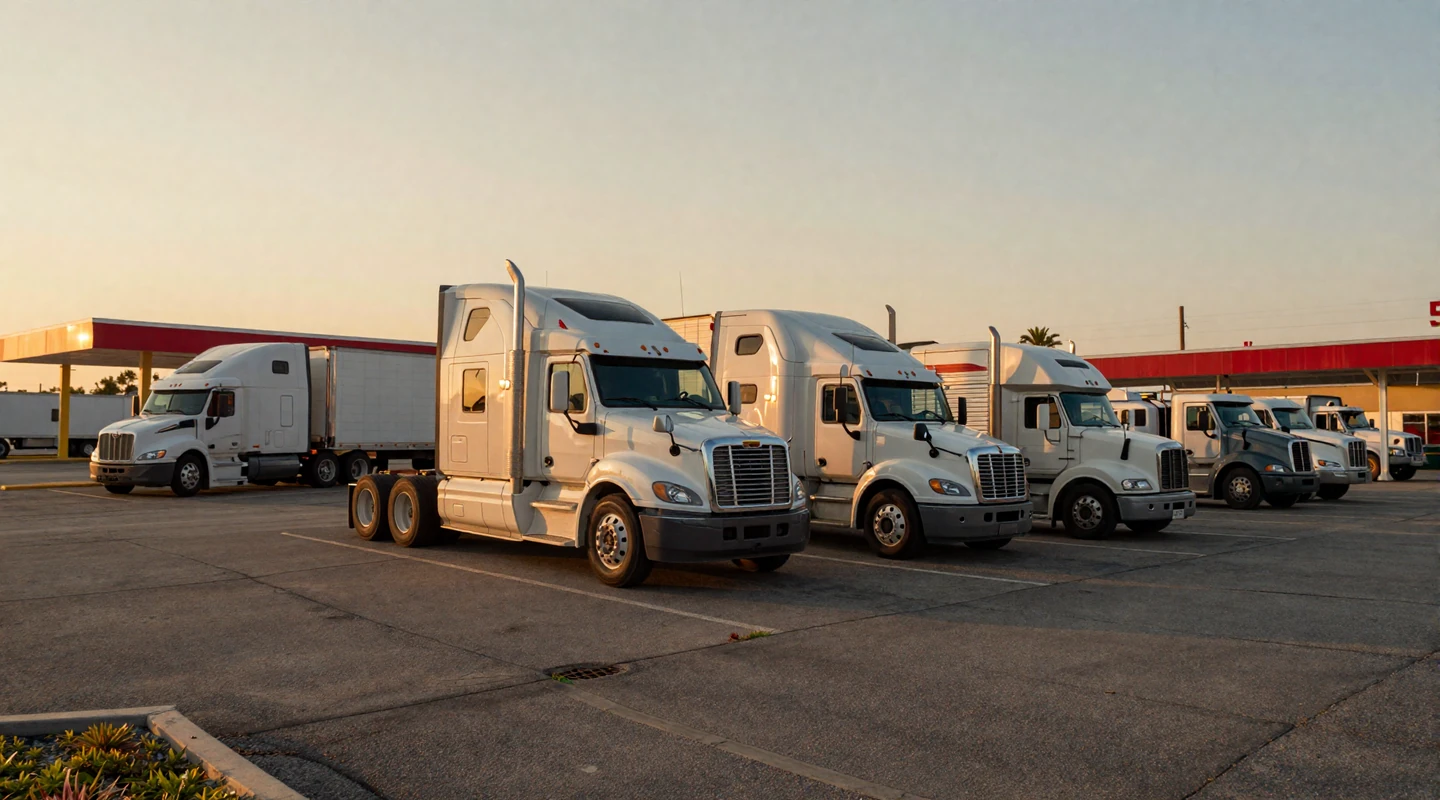
The Reality of Truck Stop Isolation
Truck stop loneliness is a measurable mental health issue, not just a passing feeling. A JW Surety Bond study found that 55% of truck drivers experience loneliness and burnout, and more than 1 in 10 report deteriorating mental health. Niche trucker chat platforms like JourneyMatch reduce this isolation by replacing swipe-based dating with road activity indicators, one-handed quick-interaction buttons, and asynchronous communication designed for 10-minute fuel stops.
- 55% of drivers report loneliness and burnout (JW Surety Bond).
- 95% of OTR time is spent alone, amplifying isolation at every stop.
- Niche platforms use road activity indicators instead of generic green dots.
- One-handed Wave, Message, and Connect buttons fit 10-minute fuel stops.
Mental Health on the Road: The JW Surety Bond Statistics
The mental health of truck drivers is a crisis hiding in plain sight. The JW Surety Bond study - one of the most comprehensive surveys of driver wellbeing - revealed a constellation of physical and psychological stressors that compound at every truck stop. Back pain affects 77% of drivers, chronic fatigue 54%, and loneliness and burnout 55%. More than 1 in 10 drivers report deteriorating mental health, yet 30% admit they ignore the warning signs and keep driving.

Here's the thing: these numbers are not abstract. They translate into 95% of OTR time spent alone, missed family gatherings for 65% of drivers, and holidays spent in a cab for 61%. The isolation is structural - built into the job's geography, schedule, and culture. When a driver parks at a TA or Pilot for a 10-hour reset, the loneliness is not just emotional; it is a measurable contributor to mental health decline.
The JW Surety Bond findings at a glance
Back pain: 77% · Chronic fatigue: 54% · Loneliness and burnout: 55% · Deteriorating mental health: 10%+ · Drivers who ignore fatigue signs: 30% · Drivers who text while driving: 49%. These figures frame why a platform like JourneyMatch - designed to support healthy relationships and reduce isolation - is not a luxury but a wellbeing tool.
What does this mean in practice? It means that any dating platform serving truck drivers must account for the mental health context, not just the logistics. A trucker lover is not just someone who tolerates the schedule - they are a lifeline against isolation. When a driver can open an app and see real, verified women who understand the road, the psychological impact is immediate: the cab feels less empty, and the next 500 miles feel less daunting.
How Niche Platforms Reduce Driver Isolation
Niche trucker dating platforms tackle isolation differently than generic apps. Instead of a swipe deck that rewards proximity and fast replies, JourneyMatch uses road activity indicators - a visual, map-style display of active users that replaces the standard green online dot with a road signal showing who is currently available for contact along your route.

The bottom line: when a driver can see at a glance that three verified women are active along their I-80 route - one in Nebraska, one in Iowa, one in Wyoming - the isolation curve bends. It is no longer a blank screen and a swipe into the void. It is a map of human connection, calibrated to the realities of HOS limits and fuel-stop geography.
Generic apps cannot do this. Tinder shows you a 50-mile radius; Bumble rewards you for being downtown. A driver parked at Sapp Bros in Omaha at 2 a.m. does not need a match three blocks away - they need someone who understands they will be in Cheyenne by morning. Road activity indicators solve this by surfacing connections based on route intersection, not zip code proximity. For location-based browsing, visit our trucker dating by state hub to find women along your freight lanes.
Why the green dot fails truckers
A generic "online now" green dot tells you nothing useful. It does not show whether someone is near your route, whether they understand OTR life, or whether they are open to asynchronous conversation. JourneyMatch's road activity indicator replaces that dot with a contextual road signal - showing availability, route proximity, and communication preference in a single glance.
Quick One-Handed Interactions for 10-Minute Stops
Most OTR drivers interact with their phones during brief fuel stops, 30-minute breaks, or pre-trip inspections. These windows are short - often 10 minutes - and frequently one-handed, with the other hand on a fuel nozzle or a coffee cup. JourneyMatch's quick interaction buttons are designed precisely for these moments.
The platform offers three primary one-tap actions: Wave, Message, and Connect. Each is a single button, large enough for a 44px touch target, requiring no complex screens or multi-step flows. A driver can send a Wave - a lightweight "I'm interested" signal - in under two seconds. Message opens a pre-populated chat with quick-reply templates designed for asynchronous trucker chat. Connect sends a direct connection request for drivers ready to move beyond the initial greeting.
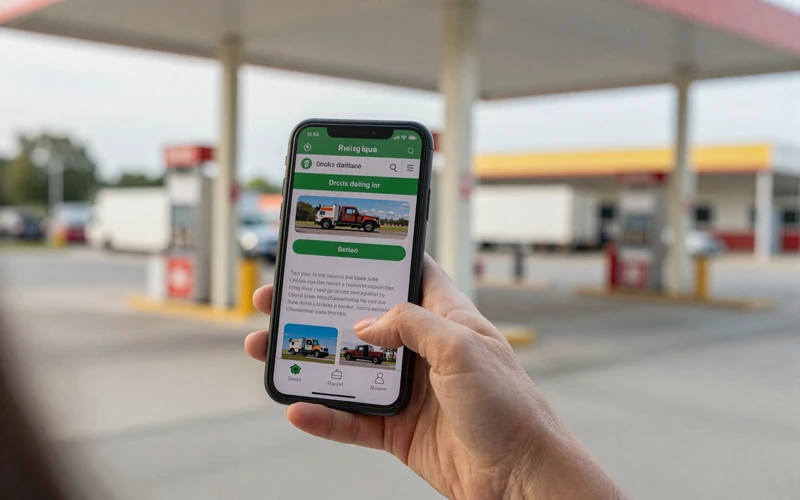
Let's break this down: the Wave button is the lowest-friction action on the platform. It does not require typing, does not demand an immediate reply, and does not penalize the recipient for taking six hours to respond during a driving window. This is critical because 49% of drivers admit to texting while driving - a dangerous behavior often driven by the pressure of instant-reply expectations on generic apps. By normalizing asynchronous, low-pressure interactions, JourneyMatch removes the urgency that leads to distracted driving.
For drivers looking to build deeper connections, the Message button includes quick-reply templates tailored to trucker communication: "Safe travels today," "Coffee when you're off the road," and "I'm parked at [truck stop] if you're nearby." These templates are designed for one-handed use during a 10-minute stop, letting drivers maintain a conversation without typing long messages. To learn more about safe communication practices, visit our trucker dating safety tips page.
Communication Tips for 10-Minute Stops
Maximizing a short break means being strategic about how you use those minutes. Here are practical tips for meaningful trucker chat during brief stops:
- Send a Wave first. It takes two seconds and signals interest without requiring a typed message.
- Use quick-reply templates. They are pre-written for trucker contexts and save typing time.
- Check road activity indicators. See who is active along your route before you send a message.
- Set a status update. Post your current location and route so women can find you when you are available.
- Save longer conversations for resets. Use 10-minute stops for quick check-ins, not deep discussions.
Consider this: a driver who sends three Waves during a fuel stop in Little Rock, checks road activity during a 30-minute break in Nashville, and sends a voice note during a pre-trip inspection in Atlanta has maintained more meaningful connection in one day than a week of swiping on a generic app. The key is frequency and low friction - not marathon messaging sessions that are impossible during HOS driving windows.
For more on building relationships within the constraints of road life, read our companion article on life on the road and dating, and for practical strategies on sustaining connections across long hauls, see our guide on maintaining relationships during long hauls. If you are new to the trucker dating world, our how to date a truck driver guide covers the fundamentals.
Frequently Asked Questions
These answers address common questions about truck stop loneliness, trucker chat, and how niche platforms help drivers meet truckers online safely.
How common is loneliness among truck drivers?
Loneliness is widespread among truck drivers. The JW Surety Bond study found that 55% of drivers experience feelings of loneliness and burnout, and more than 1 in 10 report deteriorating mental health. With 95% of OTR time spent alone, isolation is a structural reality of the job - not a personal weakness. Niche platforms like JourneyMatch are designed to reduce this isolation through route-aware matching and asynchronous trucker chat.
What is a trucker chat and how does it work?
Trucker chat on JourneyMatch is an asynchronous messaging system built for OTR schedules. Instead of demanding instant replies, it uses quick-reply templates, voice notes, and one-handed interaction buttons - Wave, Message, and Connect - designed for 10-minute fuel stops. Road activity indicators show who is available along your route, so you can connect with a trucker lover without the pressure of real-time conversation.
How can I meet truckers online safely?
The safest way to meet truckers online is through a niche platform with multi-step profile verification, occupation badges, and community reporting tools. JourneyMatch verifies profiles to reduce catfishing by up to 90% and never requires a credit card to browse. For detailed safety guidance, visit our trucker dating safety tips page, which covers recognizing romance scammers and configuring privacy settings.
What are road activity indicators?
Road activity indicators are JourneyMatch’s visual, map-style display of active users. Instead of a generic green online dot, the platform shows a road signal that indicates who is currently available for contact along your route. This helps drivers find connections near their freight lanes rather than relying on urban proximity algorithms that deprioritize long-distance profiles.
Can I use JourneyMatch with one hand during a fuel stop?
Yes. JourneyMatch’s quick interaction buttons - Wave, Message, and Connect - are designed for one-handed use during 10-minute stops. Each button meets the 44px minimum touch target for accessibility, and quick-reply templates eliminate the need for typing long messages. This lets drivers maintain meaningful connections without compromising safety or schedule.